

AI for Fashion Startups: Current State, Value, and Potential for Growth
AI continues to seep into all facets of professional and personal life. Fashion is an industry where a true breakthrough is yet to happen — one where efficiencies increase as dramatically as we've seen elsewhere — but we are on the cusp. The tools are multiplying fast, and the question is no longer if AI will transform fashion, but when it clicks into place.
This article outlines how AI is currently being used by fashion startups, what the limitations are, and what's on the horizon.
Visual Inspiration
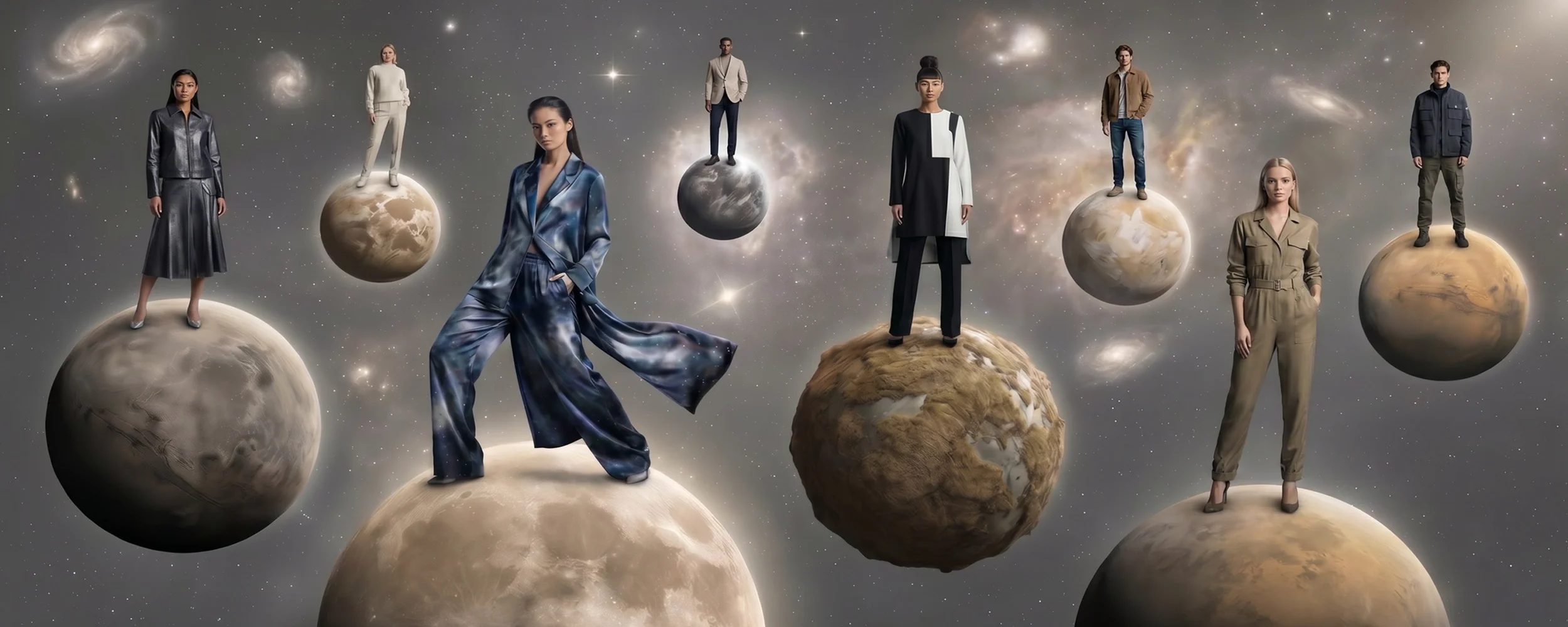
AI image generation — within general tools like ChatGPT or image-specific platforms like the Nano Banana plugin in Photoshop — can produce powerful inspirational imagery. With a well-articulated prompt or helpful visual references, AI can generate lifelike images that help you find your vision and convey it to a designer who can interpret it into sketches and tech packs a factory can execute within your budget and available materials.
Photorealistic Design Visualization
One of the most significant recent developments in fashion AI is the ability to create photorealistic renderings of apparel designs before developing physical samples. Once designers finalize tech packs, they can feed files into AI tools that visualize designs in 3D. Depending on the complexity of the garment, accuracy can vary — but in some cases these visualizations are convincing enough to use for pre-launch marketing or to gather feedback before samples are produced. These virtual samples also help reduce time and waste by cutting down the number of physical samples needed to reach your final design. Seeing a realistic rendering makes it easier to catch issues and refine details before the garment exists in the real world.
AI Design and Tech Pack Tools
A growing number of AI tools now promise to take designs further — from concept visualization through to production-ready assets. Some of these are genuinely useful at the ideation and visualization stage. However, for startups evaluating these tools: the technology is still maturing. Reliability varies significantly, and the gap between an impressive demo and a manufacturable garment remains real. Use them to explore and iterate, but lean on experienced technical designers to get you across the finish line. That said, this space is evolving quickly and is worth watching closely.
Trend Forecasting
AI-powered trend forecasting tools now analyze millions of social media images to predict where fashion is heading — some claiming accuracy up to 24 months out. For startups, the most practical application isn't subscribing to an enterprise forecasting platform, but rather using general AI tools like Claude to synthesize trend reporting, analyze competitors, and pressure-test design decisions before committing to production.
AI in E-Commerce
Shopify has introduced a variety of AI integrations that speed up web development and reduce the need for programmers to customize themes. The AI Sidekick can help you execute various site components and sometimes implement coded customizations — though this is still hit or miss and can be more trouble than it's worth.
On the Horizon
Visualizations from prompts will continue to get more photorealistic and accurate. Shopify and other e-commerce platforms will keep advancing. Most crucially, the goal the industry is actively working toward — AI tools that can carry a design all the way from concept to factory-ready tech pack — is not science fiction. It's being developed now. Once that technology is truly reliable and adopted at scale, the industry will be genuinely revolutionized. It may democratize product development to some degree, but most likely — as we're seeing in other industries — creating quality product will still require experienced designers writing intelligent prompts that incorporate real fabric and construction knowledge. AI will also likely advance in ways that help piece together supply chains and streamline factory communication, but having the technical knowledge to direct those tools will remain crucial.
All that said, the moment is coming where product development timelines compress and cost and waste drop significantly — in ways that benefit consumers, entrepreneurs, and experienced industry experts alike.
It's important to remember that while AI-driven design tools bring real benefits to the creative process, they cannot fully replace human creativity, artistic sensibility, and expertise in garment construction. As AI continues to advance, it holds the potential to further revolutionize how fashion products and brands are developed — and it will be fascinating to watch the industry evolve alongside it.
To learn more about integrating AI technologies into your fashion business, contact Stateless, a fashion consulting firm offering comprehensive services for design, development, production, branding, e-commerce, and marketing.